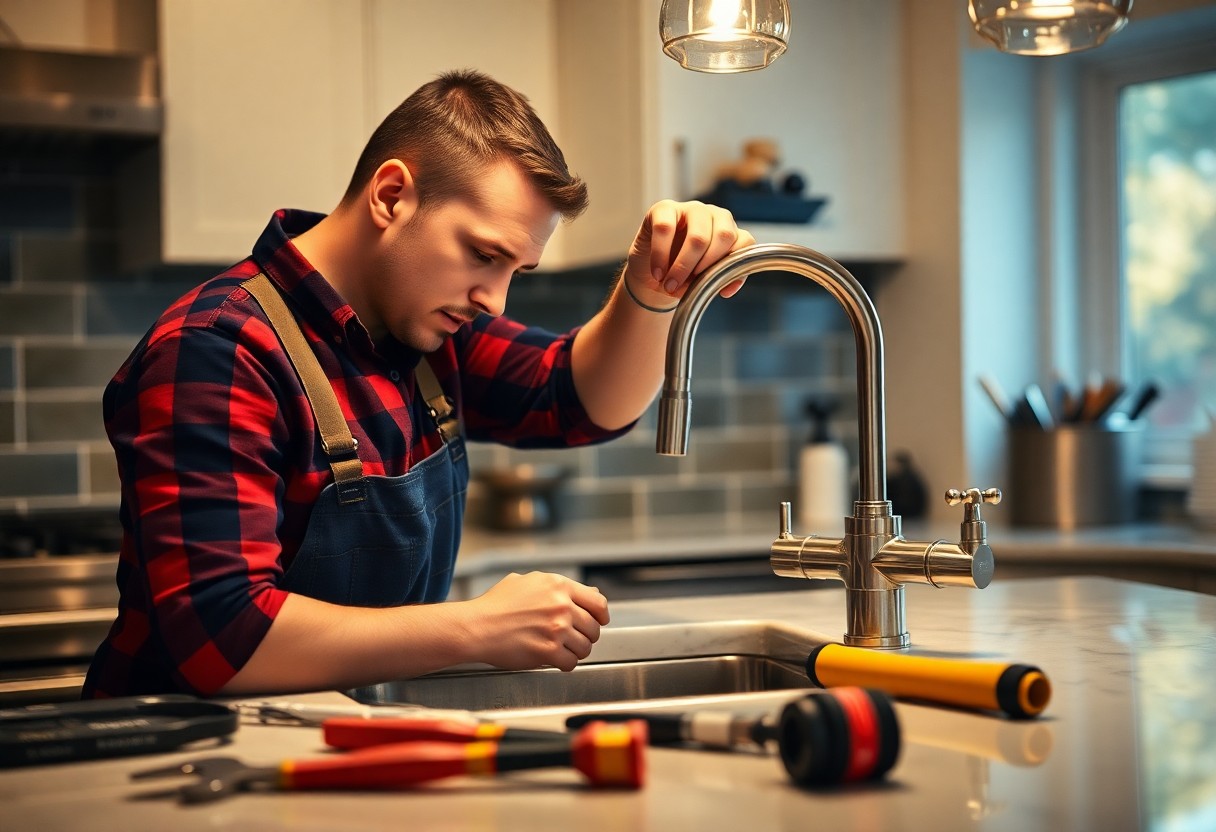
You will find everything you need to know about faucet repair in Delaware, U.S.A., within this comprehensive guide. Whether you’re dealing with a leaky faucet or considering an upgrade, this post will equip you with practical tips, important tools, and step-by-step instructions to tackle various faucet issues. Your ability to troubleshoot and resolve these common plumbing challenges will save you time and money, empowering you to maintain your home efficiently. Dive in to discover how you can approach faucet repair like a pro.
Key Takeaways:
- Identify Leaks: First step in faucet repair is to detect any leaks, which can cause water waste and increase bills.
- Parts Replacement: Often, replacing washer or cartridge can resolve issues and extend the life of the faucet.
- Tools Required: Basic tools like wrench, screwdriver, and plumber’s tape are necessary for effective repairs.
- Water Supply Shut-off: Always shut off the water supply before starting any repair to prevent flooding.
- Regular Maintenance: Regularly check and maintain faucets to prevent potential future issues from arising.
- Professional Help: For complex repairs, consulting a plumber can ensure that the faucet is handled correctly.
- Local Regulations: Be aware of Delaware plumbing codes and regulations during the repair process.
Types of Faucets
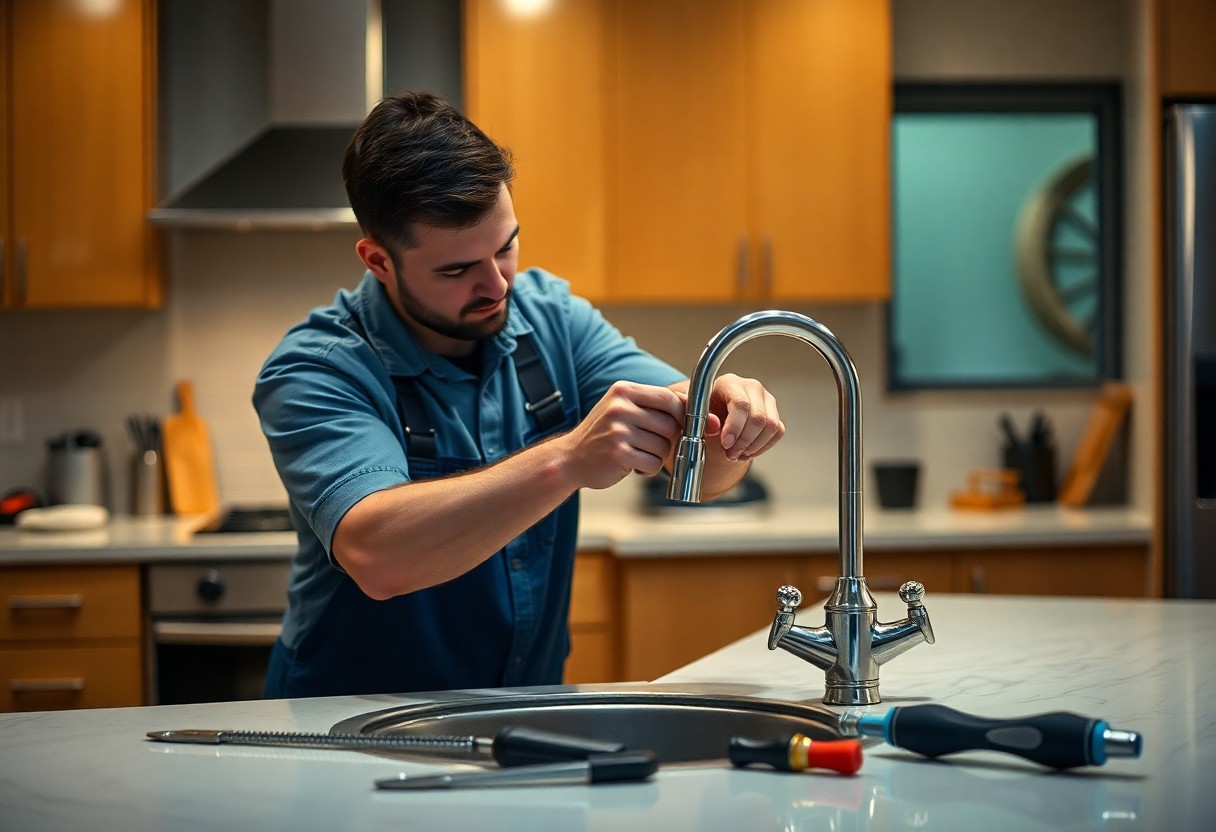
A variety of faucets exist to suit different needs and preferences. Each type has its own mechanism and design, which affects not just the functionality but also the aesthetics of your kitchen or bathroom. Below is a table outlining the most common types of faucets you may encounter or choose for your home:
| Type of Faucet | Description |
|---|---|
| Compression Faucets | Oldest type that operates by using two screws to compress rubber washers. |
| Cartridge Faucets | Uses a hollow cartridge to control the flow and temperature of water. |
| Ball Faucets | Utilizes a ball joint that controls both the flow and temperature. |
| Ceramic Disc Faucets | Employs ceramic discs to regulate water flow, ensuring durability. |
| Pull-down/Pull-out Faucets | Features a detachable spout for easy maneuverability, ideal for washing dishes. |
Thou can choose any of these faucet types based on your personal needs, whether it’s for aesthetics or functionality.
Compression Faucets
There’s a reason compression faucets are often found in older homes—they are one of the simplest and most straightforward types of faucets. They operate by screwing a rubber washer into place, which then seals the water flow. This mechanism can wear out over time, leading to leaks that can usually be repaired by simply replacing the washers. The design also features two handles, one for hot water and one for cold.
In addition to being easy to repair, you’ll find that compression faucets are generally more affordable than other types. However, keep in mind that because they use washers, they might require more maintenance over the years compared to cartridge or ceramic disc faucets.
Cartridge Faucets
Even though cartridge faucets may appear simple, they have a more complex design than compression faucets. These faucets use a cartridge that sits inside the faucet body, controlling the water flow and temperature with a simple rotation of the handle. They are available in single-handle and dual-handle models, making them versatile for different installations. The design allows for smoother operation and often results in fewer leaks.
These faucets are a popular choice for many homeowners, especially those looking for modern convenience and style. They also tend to have a longer lifespan compared to compression faucets, reducing the overall need for repairs over time.
With options for both single and double handles, cartridge faucets offer a good balance of style and performance. Their ease of use and longevity often make them a preferred choice for many homeowners looking to update their kitchens or bathrooms.
Ball Faucets
If you are considering a faucet that combines functionality and modern design, ball faucets may be the answer. They consist of a single handle that controls the spout’s temperature and flow through a moveable ball joint. This design allows for precise water control, making the faucet easy to operate with one hand. They are commonly found in kitchen sinks due to their versatility and ease of use.
Moreover, ball faucets are excellent for accommodating various flow patterns, making them a valuable addition to any kitchen. Their unique design and operational mechanism can often result in fewer leaks compared to traditional faucet types, provided they are well-maintained.
Faucets like these are perfect for those who want functionality without compromising style. The ball mechanism allows your design choices to remain stylish while providing reliable performance.
Ceramic Disc Faucets
On the other hand, ceramic disc faucets are renowned for their durability and long lifespan. They utilize ceramic plates that slide over one another to control water flow, making them more resistant to wear and tear compared to other types. This design reduces the risk of leaks significantly while allowing for easy operation. They come in both single-handle and double-handle configurations, providing flexibility in your choices.
By investing in ceramic disc faucets, you’re opting for a long-term solution that ultimately saves on maintenance and repairs, making them an economical choice in the long run.
Additionally, a wide array of styles and finishes is available for ceramic disc faucets, allowing you to create the perfect look to match your kitchen or bathroom decor. Their reliability and smooth operation often make them the top choice for many homeowners.
Common Faucet Problems and Symptoms
Your faucet is often an overlooked yet necessary fixture in your home, so understanding common faucet problems can save you time and money in the long run. Being aware of these issues will allow you to recognize symptoms early and take necessary action, whether it’s an easy DIY fix or a call to a professional plumber.
Leaky Faucets
The most frequent problem homeowners face is a leaky faucet. This issue usually presents itself as water dripping from the spout even when the faucet is turned off completely. Such leaks can be more than just an annoyance; they might indicate a worn-out washer or O-ring. Over time, even a small leak can lead to increased water bills and potential water damage to your cabinetry or countertops.
To tackle this problem, you will first need to identify the source of the leak. Sometimes, it can be fixed by simply tightening a retaining nut or replacing a worn part. Nevertheless, if the leaking persists, it might be a signal that a deeper issue is at play, likely requiring more comprehensive repairs.
Low Water Pressure
Some homeowners report experiencing low water pressure when using their faucets. This can lead to a frustrating experience, especially when you need a steady flow for washing dishes or performing other household tasks. Reasons for low water pressure can include clogged aerators, mineral build-up in pipes, or issues with the water supply line.
Common causes of low water pressure are often related to debris buildup or a malfunctioning faucet cartridge. It’s important to locate the source of the problem, as this will determine the best course of action. Sometimes, a simple cleaning of the aerator or replacing a worn-out cartridge can dramatically improve water flow.
Noisy Faucets
Faucets can make a variety of noises, such as screeching, rattling, or hissing, which might be a sign of malfunction. Noise issues can arise from several factors, including air in the water lines, a loose washer, or water hammer, which results from a sudden change in water flow. Resolving these noises might require some troubleshooting to identify the underlying cause.
To reduce noise, it is typical to check for loose fittings or problematic hardware, and tightening any loose components can mitigate some of these sounds. If water hammer is the issue, installing a water hammer arrestor may provide a long-term solution.
Stiff Handles
If you find that your faucet handles are stiff and difficult to turn, it may be due to mineral deposits or an internal problem with the cartridge. Stiff handles can significantly impact your ability to use the faucet effectively. Cleaning the area around the handles and applying lubricants may help resolve the issue, but sometimes, replacement is necessary if the problem persists.
Faucets with stiff handles can be indicative of a larger problem, as they may not efficiently control water flow. Regular maintenance can prevent stiffness and promote smoother operation, ensuring a better user experience each time you use your faucet.
Tips for Successful Faucet Repair
Now that you’re ready to tackle your faucet repair, it’s important to arm yourself with the right knowledge and approach. Here are some tips to facilitate a smooth process:
- Gather all necessary tools before you begin.
- Turn off the water supply to prevent any mess.
- Wear protective gear to safeguard against any accidents.
- Identify the source of the problem accurately.
- Be patient and take your time throughout the process.
Assume that these steps will lead to a successful repair and help you achieve a fully functioning faucet. For professional assistance, you might consider consulting Leaky Faucet Repair | MD, DC, NJ, VA, DE & PA Plumbing ….
Gather Necessary Tools
Gathering the right tools before starting your faucet repair can make the entire process much easier. You’ll need a few basic tools like an adjustable wrench, screwdrivers (flat-head and Phillips), pliers, and a basin wrench. Additionally, depending on the type of faucet you have, you may require specific parts like O-rings, cartridges, or washers.
Make sure each tool is clean and in good working condition. Having everything you need within reach will save you from unnecessary interruptions and ensure you complete the job efficiently. Always check that you have the proper replacement parts as well, ensuring they are compatible with your faucet model.
Turn Off Water Supply
Little do many realize, turning off the water supply is an important first step when begining on a faucet repair. Locate the shut-off valves typically found under the sink or behind the wall. Turning these valves clockwise will stop the flow of water. If your sink doesn’t have individual shut-off valves, you’ll need to turn off the main water supply for your home.
By ensuring that the water is off, you can work without the constant worry of leaks or flooding during your repair. It also allows you to take apart the faucet without worrying about potential splashes or spills.
Plus, if your faucet has a sprayer, remember to disconnect it as well. This will further prevent water from leaking during the repair process and give you a clear workspace.
Wear Protective Gear
Gear up for the task by wearing the proper protective equipment. Safety glasses are important to shield your eyes from debris that could fall during the repair. Durable gloves will protect your hands from sharp edges and any harsh chemicals you might encounter. If you are using any sort of power tools or potentially hazardous materials, additional protective wear may be necessary.
By taking these precautions, you ensure that your repair efforts remain safe and free from accidents. Proper protective gear also allows you to focus on the repair job without distraction.
A little effort put into your safety will ensure you stay focused on the task at hand and not be sidetracked by injuries or discomfort.
Identify the Source of the Problem
Tips on identifying the source of the problem can greatly enhance your faucet repair experience. First, observe if the leak is coming from the faucet handle, the base, or perhaps from the spout. This will help you determine which components need to be inspected further. Pay attention to whether the issue appears when the faucet is turned on or off, as this can indicate whether it’s a problem with the cartridge, washer, or O-ring.
Additionally, consider checking connections to other fixtures, as clogs and leaks elsewhere can lead to faucet issues as well. A thorough inspection can save you time and effort by pinpointing the exact cause of the malfunction.
Protective measures should be taken to handle various parts safely, as some may be under pressure or contain buildup that could emit unpleasant odors. Identifying the problem correctly is half of the battle in resolving your faucet issues.
Step-by-Step Repair Procedures
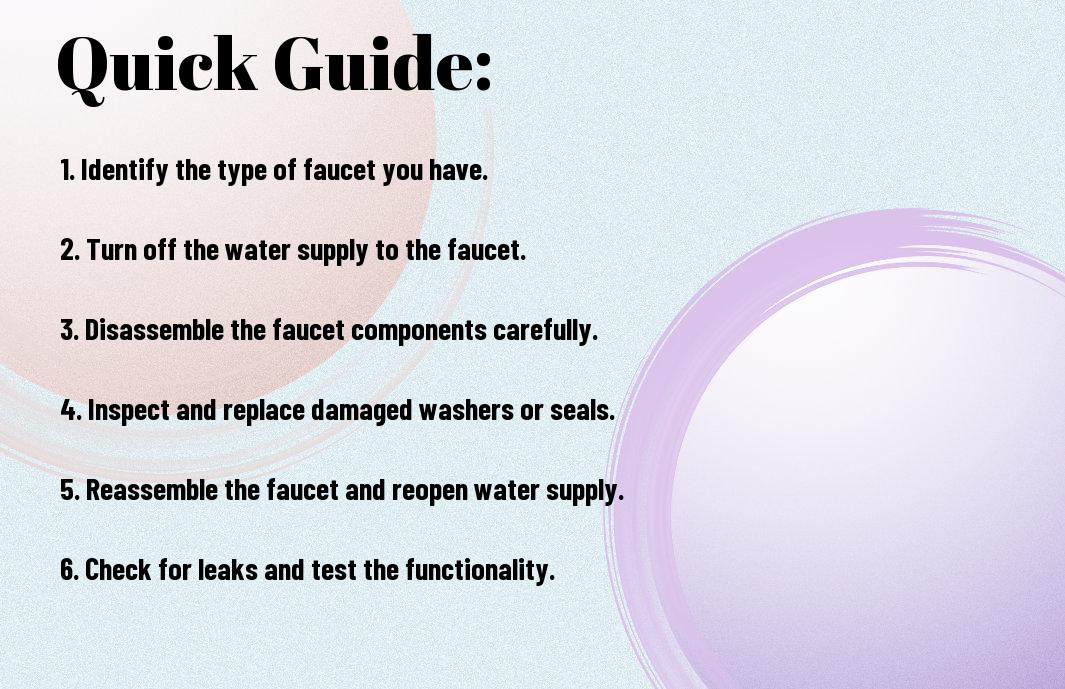
After identifying the issues with your faucet, you can follow these step-by-step procedures to perform the necessary repairs. If you feel uncertain about handling plumbing tasks on your own, you can always consult professionals in your area. For example, you can find assistance with Kitchen Plumbing in Newark, DE | Sink & Garbage Disposals.
| Repair Task | Procedure |
|---|---|
| Fixing a Leaky Faucet | Turn off water, disassemble faucet, replace O-ring or washer, reassemble faucet |
| Replacing a Cartridge | Turn off water, remove handle, pull out the cartridge, insert new cartridge, reassemble |
| Unclogging a Faucet Aerator | Unscrew aerator, clean out debris, reattach aerator |
| Tightening Loose Parts | Identify loose components, use a wrench to tighten, check for leaks |
Fixing a Leaky Faucet
To fix a leaky faucet, start by turning off the water supply. This is typically done by shutting off the valves under the sink. Once you have turned off the water, disassemble the faucet by removing decorative caps or screws. Pay attention as you do this to keep track of where each part goes. Replace the worn-out O-ring or washer that is likely causing the leak. Finally, reassemble the faucet and turn the water back on to check for leaks.
By methodically following these instructions, you can significantly reduce the chances of future leaks. Inspecting the faucet after the repair can be beneficial in determining if any other issues may need to be addressed.
Replacing a Cartridge
For faucets that utilize a cartridge, replacement is a straightforward process. Begin by turning off the water supply and then removing the handle from the faucet. This usually requires unscrewing a retaining screw located beneath the handle. Once removed, you can pull out the old cartridge by lifting it straight up. Ensure that you clean the area thoroughly before inserting the new cartridge. Finally, reassemble everything and test the faucet.
When replacing the cartridge, ensure that you purchase the correct size and model for your faucet. This information can usually be found in the faucet’s manual or by looking online for your specific model.
Another benefit of replacing the cartridge is that it can improve water flow and pressure, as well as eliminate leaks more effectively compared to simply replacing washers or O-rings.
Unclogging a Faucet Aerator
Unclogging a faucet aerator is often a simple task you can do on your own. Begin by unscrewing the aerator from the tip of the faucet. You may need to use pliers or a cloth to grip it firmly without damaging the finish. Once removed, inspect the aerator for any clogs caused by mineral deposits or debris. Cleaning it can typically be accomplished by rinsing under warm water or soaking it in vinegar.
After cleaning, make sure to reattach the aerator to the faucet securely. Doing this regularly can help improve your faucet’s water flow and efficiency.
Faucet aerators play a significant role in reducing water consumption and maintaining pressure. Keeping them clean can save you money on water bills as it enhances water flow efficiency.
Tightening Loose Parts
On occasion, your faucet may simply be experiencing issues due to loose parts. Begin by inspecting all visible screws and components to identify any that may require tightening. Use a wrench or screwdriver to securely fasten any loose parts. It’s important to take care to avoid overtightening, which can damage the faucet.
Once you have tightened the connections, run the water to check for any leaks. If there are still issues, further disassembly might be necessary.
Plus, taking the time to tighten loose components can extend the lifespan of your faucet and prevent future water waste, leading to both savings and efficiency in your water usage.
Factors to Consider When Repairing Faucets
Many homeowners often overlook several key factors when considering faucet repairs. Understanding these elements can significantly influence the quality and longevity of your repair. Here are a few to keep in mind:
- Age of the faucet
- Type of faucet
- Availability of replacement parts
- Water quality
Perceiving these factors early on can help you make informed decisions that ultimately save you time and money.
Age of the Faucet
You should consider how long the faucet has been in use. Older faucets may have worn out parts, which could mean that repairs will not only be more frequent but may also require specialized parts that are harder to come by. If your faucet is decades old, upgrading to a newer model may be more beneficial than attempting to fix a series of outdated components.
Moreover, newer faucet designs often incorporate advanced technology that enhances durability and performance. If your faucet is from a bygone era, the materials and construction methods are likely inferior to what is available today. You may find that investing in a new faucet rather than simply repairing the old one might be the better option.
Type of Faucet
Some faucet types necessitate different repair methods and tools. Ball faucets, cartridge faucets, compression faucets, and cartridge faucets all feature distinct mechanisms, and understanding which type you have is imperative before proceeding with a repair. Additionally, the repair requirements may differ significantly among these types, affecting your choice of tools and replacement parts.
Faucets that are designed differently will typically also have various repair processes. Some may require just a simple seal replacement, while others may need an entirely new cartridge. Knowing your faucet’s type can help streamline the repair process and increase the effectiveness of your repairs.
Availability of Replacement Parts
Availability of replacement parts is a significant factor to consider as well. If your faucet is an older model or from a less prominent brand, it may be tough to find the specific parts you need for a successful repair. This difficulty can lead to delays and frustration during the repair process, as well as potentially increasing the costs if you need to source parts online or through specialty suppliers.
On the other hand, if your faucet is a well-known brand, you are likely to find replacement parts readily available at local hardware stores or online. This availability can make your repair much more manageable, ensuring that you can complete the work more quickly and efficiently.
Water Quality
Water quality plays a vital role in the maintenance and repair of your faucets. Hard water, for example, contains high levels of minerals like calcium and magnesium, which can lead to faucet scaling and internal buildup. If your home has hard water, you may experience more frequent faucet issues, which could necessitate regular repairs or replacement.
Additionally, poor water quality can cause corrosion and damage to various components of your faucet. It’s crucial to be aware of your water quality so that you can take appropriate measures, such as installing a water softening system if necessary, to prolong the life of your faucets.
With a clear understanding of water quality, you can better assess the longevity of your faucet and make more informed choices regarding repairs or replacements. A proactive approach can prevent potential complications down the line.

Pros and Cons of DIY Faucet Repair
All homeowners faced with a leaky faucet often consider tackling the issue themselves. Before submerging into the DIY approach, it’s vital to weigh the pros and cons to make an informed decision.
Pros and Cons of DIY Faucet Repair
| Pros | Cons |
|---|---|
| Cost-effective solution | Potential for costly mistakes |
| Gain hands-on experience | Time-consuming process |
| Immediate access to tools and supplies | Limited access to specialty tools |
| Increase your home maintenance skills | Complexity may lead to frustration |
| Personal satisfaction upon completion | Potential for further damage if improperly repaired |
| Flexible timing – repair on your schedule | Risk of injury if not careful |
| Opportunity to customize the installation | Not all repairs are suitable for DIY |
| Help maintain property value | No guarantee of fixing the underlying issue |
| Can be a fun project | May lack knowledge for complex problems |
| Can learn valuable plumbing skills | Possible need for professional help afterwards |
Advantages of DIY Repair
With the rise of online tutorials and videos, you may find that doing the repairs yourself can not only save you money, but also give you a sense of accomplishment. Learning to fix your faucet not only adds to your skillset but also allows you to address plumbing issues immediately without waiting for a professional’s availability.
Additionally, when you choose a DIY approach, you have the flexibility to tackle the project at your convenience. Unlike scheduling an appointment with a plumber, which may require adjusting your daily routine, you can set aside a weekend afternoon or even an evening to complete the task at hand.
Disadvantages of DIY Repair
With the benefits of DIY faucet repair, there are certainly drawbacks to consider. The most notable is the possibility of making mistakes that might lead to larger issues down the line. If you misdiagnose the problem or fail to fix it properly, you may end up spending more money on professional services to rectify your mistakes.
The complexity of certain faucet repairs can also be overwhelming. Many faucets have intricate mechanisms, and if you are not familiar with the specific model or lack the right tools, a simple repair can quickly turn into an incredibly time-consuming project.
The possibility of further issues arising from incorrect repairs should also be noted. If you inadvertently cause a new leak or fail to seal a connection tightly, you could end up causing more damage to your plumbing system, leading to a higher repair bill in the long run.
When to Call a Professional
Now, if the problem persists after your DIY attempts, or if you discover that the repair is beyond your skill level, it’s time to call a professional. This is especially true if you have an older faucet model or if the issue involves complex plumbing that requires specialized knowledge. Hiring an expert can save you a lot of time and frustration, ensuring that the job is done correctly.
When you feel unsure or anxious about handling the repair, rely on a licensed plumber who can provide not only a solution but peace of mind. They possess the training and experience to quickly assess the situation and provide you with the best options for repair or replacement.
Cost Considerations
Cost is an important factor when deciding between DIY and professional faucet repair. While doing it yourself may not incur direct labor costs, you’ll still need to factor in the expenses for parts, tools, and possible equipment rentals. These costs can add up, especially if you find you need several different tools or parts to complete the repair.
Another aspect to consider is if your attempted repair introduces additional problems. What initially began as a simple fix could escalate into a costly repair bill if you have to call in a plumber afterwards. Weighing the potential costs of mistakes against the savings from doing it yourself is vital to making the right decision.
Summing up
So, if you find yourself facing a faucet issue in Delaware, it’s important to take the right steps to ensure a successful repair. You have the option of tackling minor problems on your own, like replacing washers or tightening connections, which can save you time and money. However, for more complex issues or if you prefer a professional touch, engaging a certified plumber can provide the expertise necessary to resolve persistent leaks or malfunctioning faucets effectively. Your home deserves the best care, and ensuring your faucet functions properly contributes to your overall plumbing health.
By assessing your own skills and the severity of the problem, you can decide the best course of action to restore your faucet to full functionality. Taking prompt action not only enhances your daily living experience but also helps avoid more significant plumbing repairs down the line. Whether you’re choosing to fix it yourself or hire a local expert, being informed about faucet repair options in Delaware will empower you to make the best decisions for your home and plumbing system.
FAQ
Q: What are common signs that I need faucet repair in Delaware?
A: Common signs that indicate the need for faucet repair include leaking water, low water pressure, strange noises when the faucet is turned on, or water that will not shut off completely. If you notice any of these issues, it may be time to call a professional for repairs.
Q: How can I prevent faucet leaks in my home?
A: Preventing faucet leaks can be achieved through regular maintenance. Check the washers and O-rings periodically, keep the faucet clean from mineral buildup, and ensure that the handles are turned off completely. If you notice any wear or tear, consider replacing faulty parts before issues arise.
Q: Is it better to repair or replace a faucet?
A: The decision to repair or replace a faucet often depends on its age and condition. If the faucet is relatively new and only has a minor issue, repairing it may be more cost-effective. However, if the faucet is old, frequently malfunctioning, or outdated, replacement might be the better long-term solution.
Q: How much does faucet repair typically cost in Delaware?
A: The cost of faucet repair in Delaware can vary widely based on the type of faucet, the complexity of the repair, and the plumber’s rates. On average, you might expect to pay anywhere from $75 to $250 for labor and parts. It’s advisable to get quotes from several plumbers to find the best price.
Q: Can I fix a leaky faucet myself?
A: Many homeowners can fix a leaky faucet themselves if they have some plumbing experience and the right tools. Common repairs involve replacing washers or O-rings. However, if you’re unsure or the issue seems complex, it may be safer and more efficient to hire a professional plumber.
Q: Are there local plumbers in Delaware who specialize in faucet repair?
A: Yes, Delaware has many licensed plumbers specializing in faucet repair. It’s beneficial to do some research and review online ratings before selecting a plumber. Checking for proper licensing and customer reviews can help ensure you hire a qualified professional.
Q: What types of faucets are most commonly repaired in Delaware?
A: In Delaware, the most commonly repaired faucets include compression faucets, cartridge faucets, ball faucets, and ceramic disc faucets. Each type has its own unique mechanism and potential issues, so understanding the specific style of your faucet can help determine the best repair approach.